
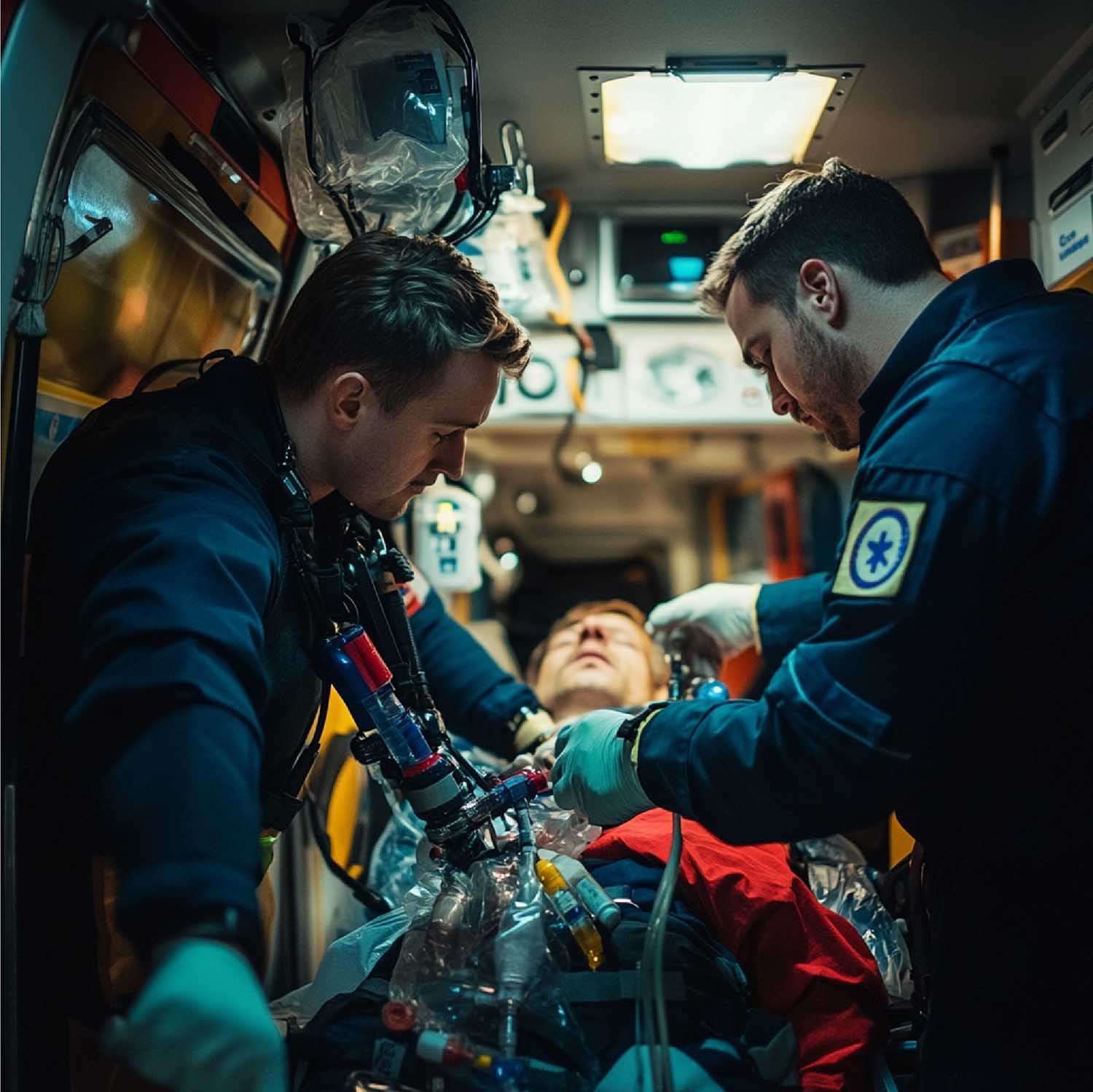
Bachelor of Emergency Medicine and Trauma Care (BEMTC)
COURSE OVERVIEW
Bachelor of Emergency Medicine and Trauma Care (BEMTC) is an undergraduate program designed to train students in emergency healthcare, trauma management, and critical patient care. The course provides both theoretical knowledge and hands-on practical training in handling medical emergencies, trauma cases, pre-hospital care, and emergency procedures. Students gain expertise in resuscitation techniques, patient stabilization, emergency medical services, and disaster management.
DURATION
3 Years + 1 Year Internship Includes classroom learning, laboratory sessions, and clinical exposure and practical training in emergency departments, trauma centers, and pre-hospital care units
Why Choose BEMTC?
High demand for trained emergency healthcare professionals
Hands-on training in real-time trauma and emergency scenarios
Opportunities in hospitals, trauma centers, and ambulance services
Strong career growth and employability
Direct involvement in saving lives during critical emergencies
Exposure to modern emergency care technologies and protocols
Foundation for higher studies in emergency medicine, critical care, or paramedical specialties
Opportunities in domestic and international healthcare sectors
Respected and essential healthcare profession
Diverse career options in clinical, research, and emergency management roles
What You Will Learn?
Emergency Medicine and Critical Care
Trauma Management and Patient Stabilization
Advanced Life Support (ALS) and Basic Life Support (BLS)
Pre-hospital Emergency Care
Disaster Management and Mass Casualty Handling
Emergency Pharmacology
Patient Assessment and Monitoring
Hospital Emergency Protocols and Administration
Career Opportunities
Emergency Medicine Technician
Trauma Care Specialist
Critical Care Unit Assistant
Ambulance and Paramedical Services Technician
Emergency Department Coordinator
Research and Teaching in Emergency Healthcare
Hospital Emergency Unit Supervisor
Employment Areas
Hospitals and Trauma Centers
Emergency Departments and Critical Care Units
Ambulance and Pre-Hospital Services
Government and Private Healthcare Facilities
Disaster Management and Rescue Organizations
Medical and Clinical Research Laboratories
Teaching Hospitals and Academic Institutions
Related items


Pharm D


B.Sc. Nursing


Agricultural Engineering